Quantum Error Correction Analysis
This section evaluates the correcting abilities of decoders and QEC codes, identifying the regimes where QEC provides meaningful error suppression.
1. Decoder Performance Comparison
We evaluate two open-source decoders: BP-OSD and MWPM. The BP-OSD parity-check decoder achieves the best overall performance, outperforming MWPM by 46.66% on average against the SI1000 noise model. However, this accuracy comes at a substantial computational cost (8 hours vs. 0.34 seconds for MWPM).

Figure 1: Trade-off between speed and accuracy across various decoding algorithms.
2. Selective Application of QEC
QEC is not universally beneficial. Once a code’s threshold is crossed, its performance deteriorates rapidly. At a two-qubit error probability of 0.004, all tested codes cross their thresholds, while unprotected qubits still show no observed errors.
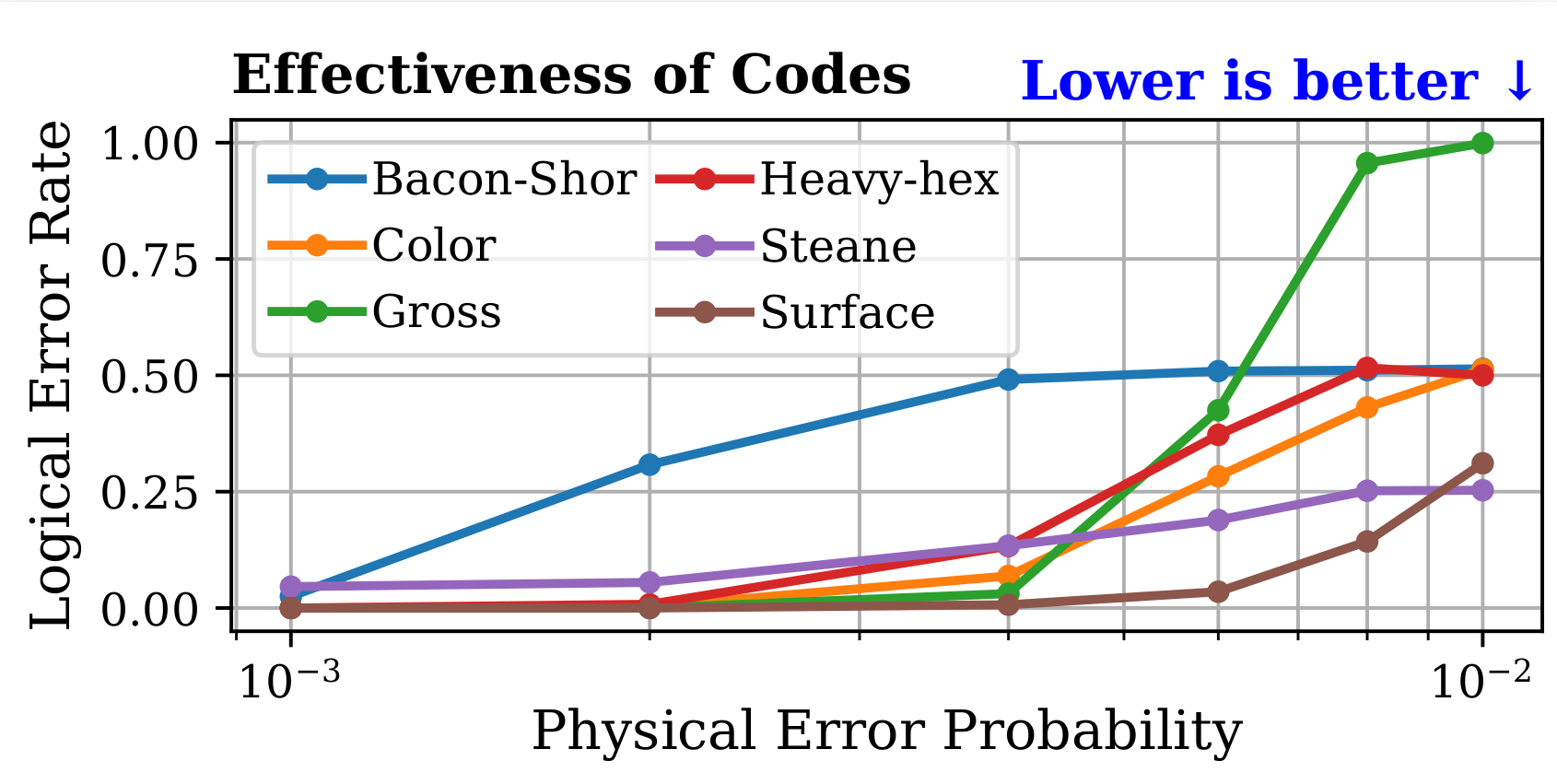
Figure 2: Logical error rate vs. physical error probability, showing threshold crossings.